
When Spray Foam Insulation Goes Wrong
Share News:

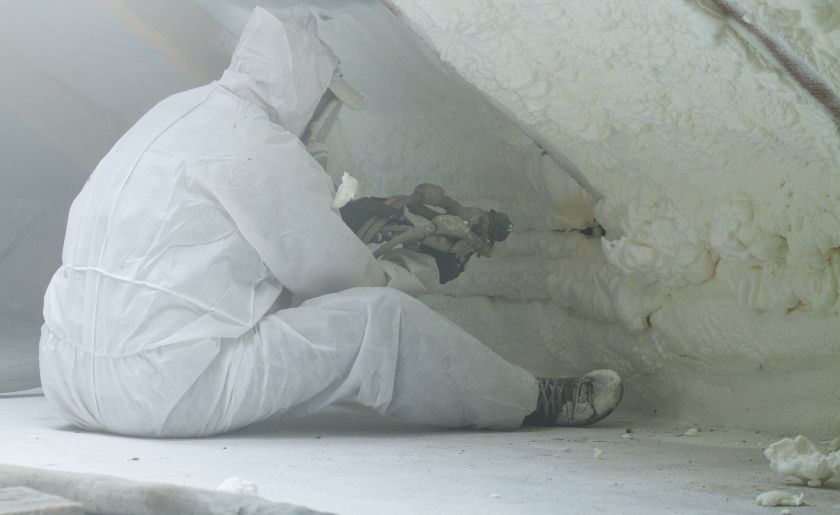
Spray foam insulation is a terrific option for insulating your attic. Especially in climates like North Texas, where attics get so hot and can add so much heat to your home. Unfortunately however, in order to be effective, spray foam insulation has to be installed and maintained correctly, and as home inspectors, we know that is too frequently not the case. And as one of the most expensive options for insulation, it’s really a shame and a waste.
So let’s look at some ways that spray foam insulation can go wrong.
Improper Installation

In this picture, the spray foam has deteriorated, virtually melting away in places. When this happens, it’s usually because the company who installed the foam failed to put down a seal which protects the foam from factors like moisture and climate, or the mixture of chemicals may have been wrong. This might have been a DIY job or just an inexperienced company. Make sure you choose a licensed professional to do your spray foam and check reviews before deciding.
To Vent or Not To Vent

When you insulate your attic with spray foam, you are encapsulating the attic, meaning you’re enclosing it completely, leaving no gaps. In this picture, they installed the spray foam leaving a hole for the attic vent, which defeats the purpose of the spray foam. Inspector Adrian explains the concept more fully in the video below.
When It’s Done Right
The biggest and most frequent mistake we see with spray foam insulation is that people fail to set up conditioned air in the attic as you see in the video. This is crucial because otherwise, you have a large, hot space sitting on top of your house. You don’t have to keep it cool (or warm) like you’d want a living space, but comfortable, so your HVAC isn’t working against the attic space.
Another important tip to remember with spray foam insulation: if you have gas appliances in your attic, you can’t encapsulate your attic. This is because gas appliances require ventilation to safely combust noxious fumes. So if you’re considering spray foam encapsulation and have gas appliances, you’d need to upgrade to electric.
Spray foam is one of the most energy-efficient insulation options for your home when it’s done correctly. If you decide to go this route, just make sure you’re educated, so you get the most out of your investment.







Thanks for the helpful article!
Great article, Brenda. This really highlights what many homeowners overlook — that spray foam insulation is only as good as its installation. I’ve seen many attics where improper sealing or ventilation ruins what should’ve been a solid upgrade.
In Fayetteville, we face similar issues — extreme attic heat and sometimes gas appliances that complicate encapsulation. Thanks again for the helpful insights — bookmarked this one!