
Reconstructing Fair Park: What We’ve Lost And Why The Ford Building Matters
Share News:


By Jay Firsching
Senior Associate and Historic Preservation Specialist, Architexas
Fair Park was designed primarily for a one-time event, the 1936 Texas Centennial and World’s Fair. Preserving the Art Deco exhibition buildings initially intended to be temporary has been challenging. We have also lost so many structures, such as the Ford Building. Can some of these be reconstructed?
When Craig Melde founded Architexas with his partners in 1978, he was already fascinated with Fair Park. A Dallas native, Melde had many state fair memories under his belt. When he joined the City of Dallas’s fledgling historic preservation department in the mid-70s, he had the opportunity to play an active role in preserving and improving the fairgrounds.

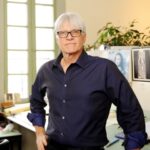
His first job at Fair Park as a practicing architect came in 1997 when he was commissioned to prepare a restoration plan for the Esplanade, Automobile, and Centennial Buildings. This was followed by decades of work, from the restoration of the iconic Tower Building and Magnolia Lounge to broad planning efforts aimed at making the park a year-round destination.
Over his decades of work, Melde came to an important conclusion. “Fair Park has received considerable recognition for its important buildings, and we have made progress in restoring them, but many folks don’t realize just how much we’ve lost.”
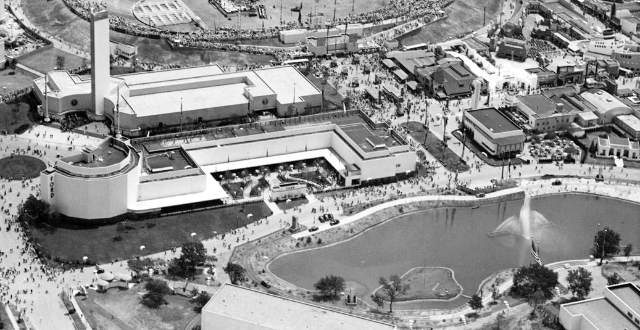
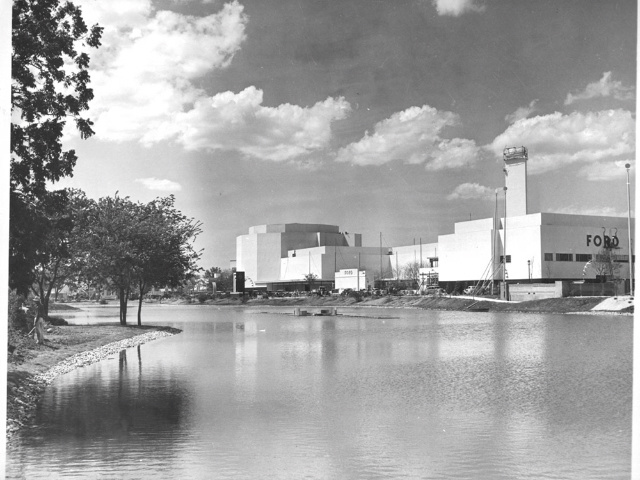
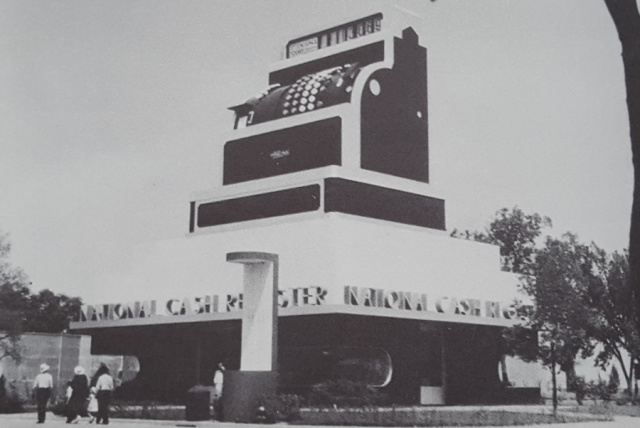
In 1936 Fair Park was jam-packed with a remarkable array of now-missing attractions. Many exposition buildings were sponsored or constructed by major corporations and removed soon after the Centennial. These included buildings for Gulf, Sinclair, Texaco, and National Cash Register Company. Chief among them was the Ford Building, the fair’s largest privately funded exposition building.

On the site of what is now the rather depressing Grand Place, the Ford Building was the southern terminus of the Court of Honor and, along with the Tower Building, formed the gateway to the Midway and its many attractions. As Melde points out, “The Centennial’s design wasn’t just about the individual buildings but also their arrangement. They all fit together as part of the park’s overall composition, framing important outdoor spaces and funneling visitors from place to place.”
It became clear to Melde that the reconstruction of the Ford Building should be a priority of any future park plan to begin to understand the original composition of significant spaces and buildings fully.
Driven by Vision
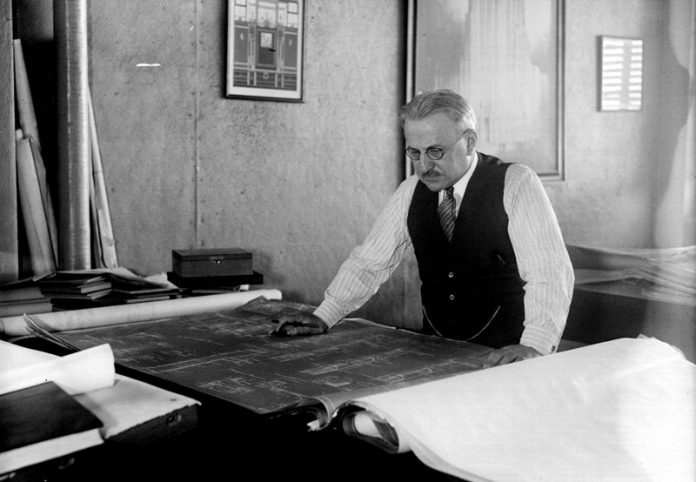
Dallas’ Ford Building resulted from a collaboration between architect Albert Khan and industrial designer Walter Dorwin Teague. Khan was among the most consequential architects of the 20th century. Not only was he a master of industrial architecture, his firm’s body of work included much of the Detroit skyline along with fine residences and university buildings.
In the late 1930s, Albert Kahn and Associates was responsible for 19 percent of US factory designs. By 1941 Kahn was the 8th highest-paid person in the nation. He was even given a special contract to design hundreds of factories across the Soviet Union.
One of Kahn’s most important relationships was with the Ford Motor Company, designing the buildings that made Ford’s innovations in assembly and efficiency a reality. Now in its 125th year, Albert Kahn and Associates remains a prominent international firm and is still an architect for Ford.
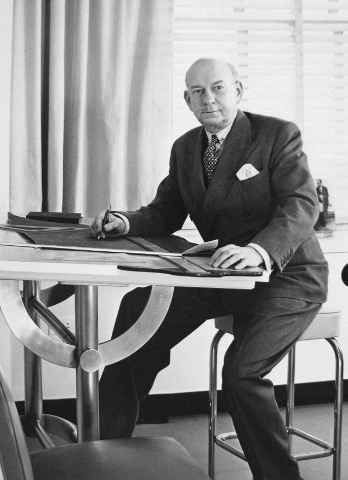
Walter Dorwin Teague was already a highly sought-after graphic designer when, at 43, he turned his attention to the fledgling field of industrial design. He famously landed a contract with Kodak in 1927, designing the company’s Brownie and Bantam Special cameras (among others) and eventually expanding to Kodak’s displays, retail spaces, and exhibits.
Teague became a leader in branding through design and had his hand in everything from radios to trains and automobiles. Also notable was his first-of-its-kind corporate identity program for Texaco that included standardized designs for service stations, pumps, signs, products, and vehicles. Teague became a leader in the design of exhibition buildings.
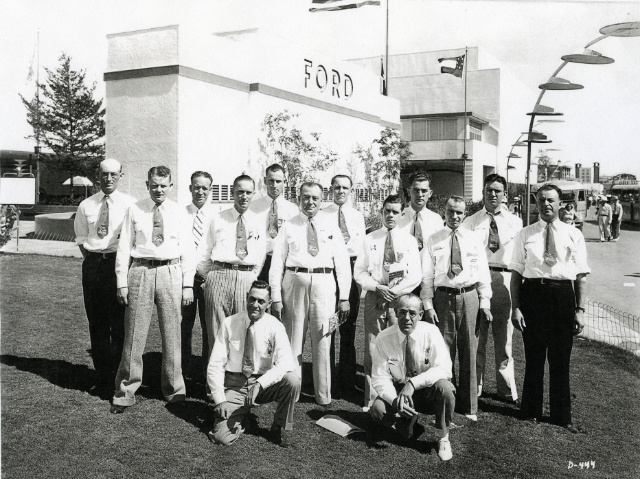
The Ford Motor Company brought Kahn and Teague together more than once in the design of its exhibition buildings. Kahn used his architectural prowess to provide the large open spaces required to showcase Teague’s genius in marketing and design. Of the four Ford exhibition buildings they designed across the US in the 1930s, San Diego’s 1935 example is the only one still existing and has been repurposed as an aviation museum in Balboa Park.
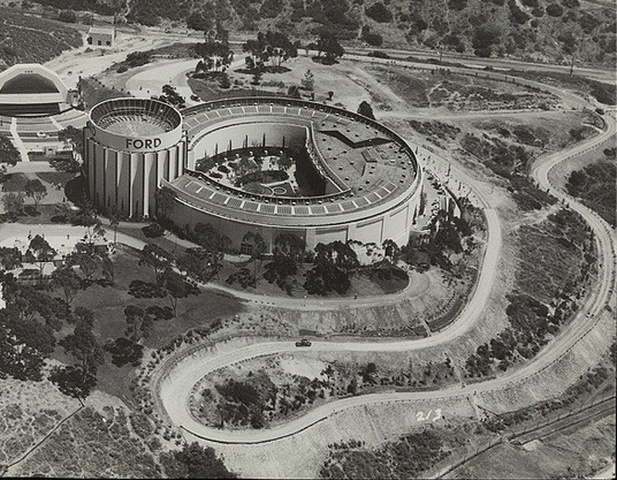
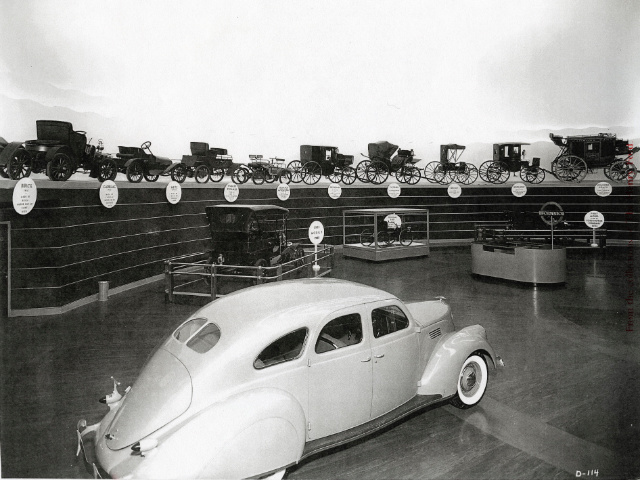
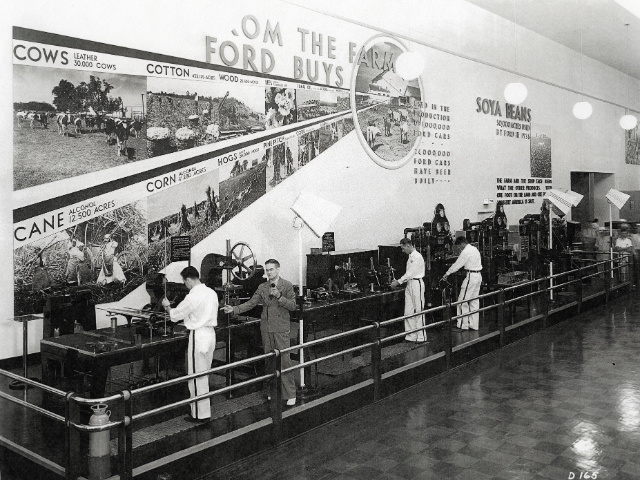
The exterior geometry of the buildings was evocative of the internal workings of machinery and, while lacking in significant exterior embellishments, were striking in their monumentality. Inside, the buildings were arranged like an assembly line, bringing fairgoers in one end, funneling them through the display areas, and ultimately depositing them at the other end.
The displays were not simply an assemblage of Ford products. They explained to observers the company’s relationship to the American economy and how it shaped raw materials into the components of cars and trucks. They even included factory workers actively processing materials just as they would at a Ford plant.
A Missing Piece to Fair Park
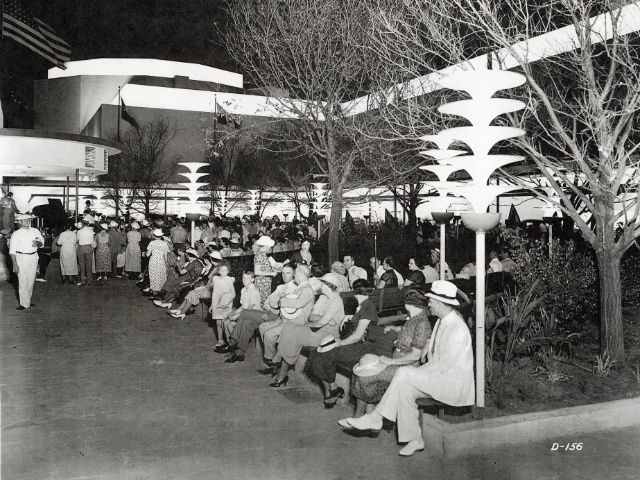
Photographs of the Ford Building offer all the evidence necessary to understand its monumental importance to the fairgrounds. From every angle, the building is a defining element of its surroundings. When visitors entered the air-conditioned building off of what is now Big Tex Circle, a large entry rotunda served as an orientation space.
It included a display depicting the evolution of automobiles. This was followed by a gallery showcasing the dozens of raw materials Ford brought together and processed in their massive assembly plants before feeding them into the main hall’s manufacturing exhibits. After perusing the main hall displays, guests exited to a beautiful courtyard where they could see additional displays or enjoy a show at the Ford bandstand.
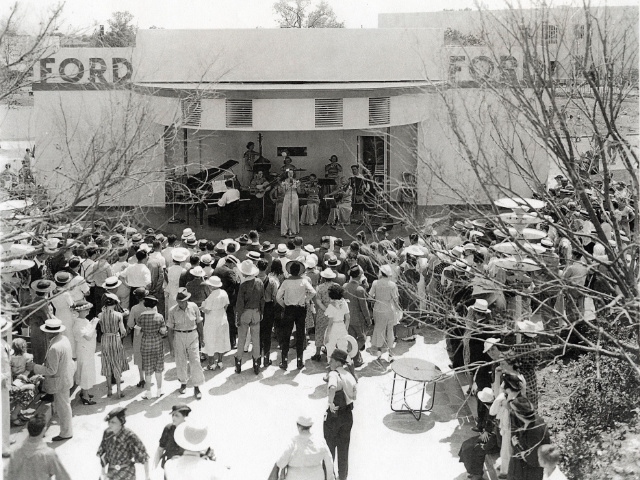
Upstairs, the building included offices and VIP lounges for special guests and celebrities. Near the lagoon, visitors could also line up to ride in the latest Ford models driven on a loop depicting the driving conditions on famous Roads of the Southwest.
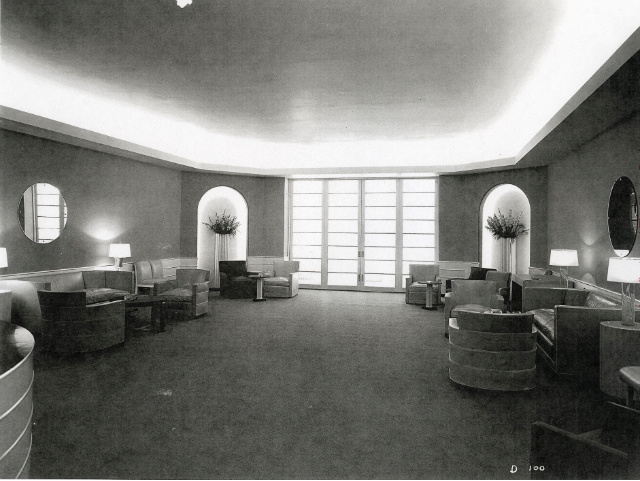
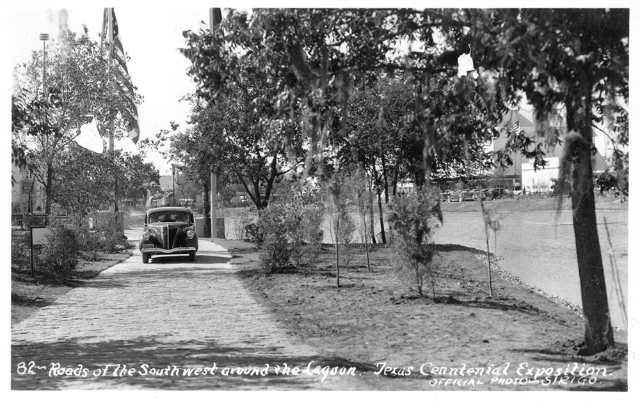
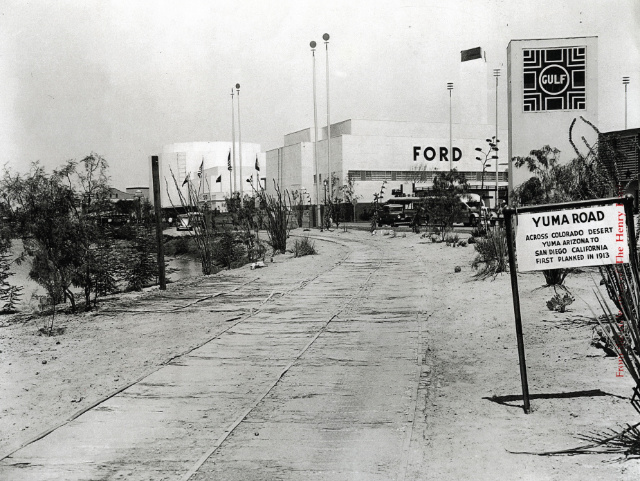
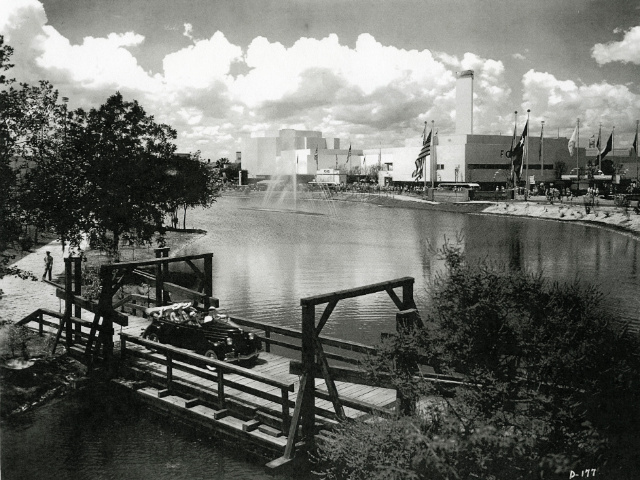
Melde’s fascination with the Ford Building eventually took him to Detroit a few years ago. He was greeted enthusiastically by Kahn and Associates, whose archive houses the original architectural drawings. A visit to the Henry Ford Museum provided a treasure trove of photographs showing important design details.
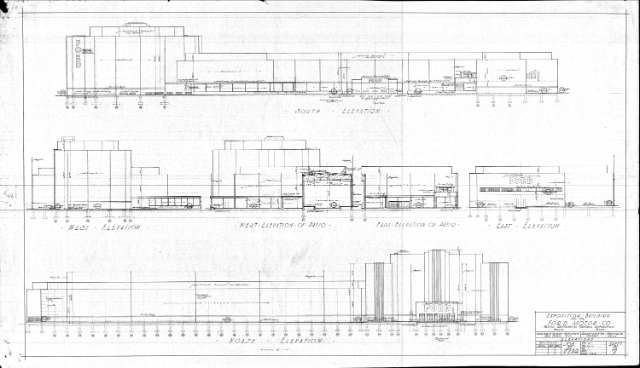

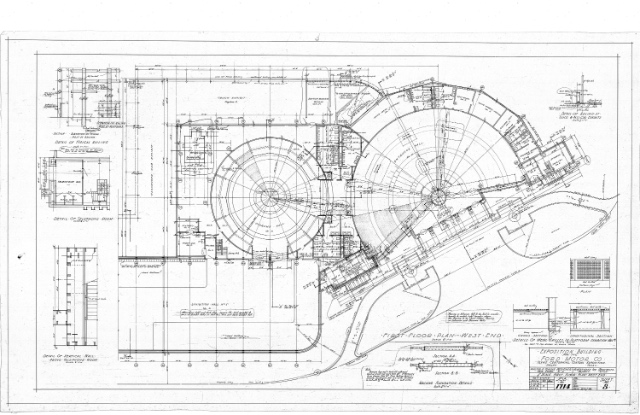
“We have the information we need to accurately reconstruct the design, but the project needs to make economic sense to be viable, Melde said. “That means incorporating new uses that support the park’s operation and generate revenue.” Construction funding is also an issue, and it is hoped that Ford, Kahn, and Teague will all show some enthusiasm for sponsoring the effort.”
And what does Melde intend to do when his efforts to reconstruct the Ford Building are finally successful?
“Well, reconstruct the Petroleum Building, of course!”



I have often thought that they need to bring back horse racing to Fair Park . It was there in the begining . It would expand the calendar of park use and create a revenue stream .
The non-profit in charge has let the buildings fall to disrepair-while paying themselves six and seven figure salaries-for decades. The smartest move is to fire everyone on the State Fair of Texas board of directors and then demolish every building in sight.
which buildings are in disrepair.
Wow USN Veteran! Demolishing the largest collection of art deco buildings in America is not a solution. The Hall of State has been completely renovated and is gorgeous. There is a Preservation Dallas tour this month if you’d like to see it. Fair Park is a jewel and there are people working diligently to ensure it serves the public for more than a few weeks out of the year.
Jerry I, personally, would love to see a racetrack but I don’t think it’s high on the list of desires for the park lol!
Most Texans have wonderful memories of the State Fair and the fantastic displays. Mine were in the early 1960 riding a school bus from Madisonville early in the morning with fellow FHA members. We spent the day in groups of 3 or 4 touring and enjoying and left at dusk. We slept on the bus home and talked about our experiences over and over. I still cherish the memories. My Mother shared her memories of spending her honeymoon there and she was fascinated by the experience. When I met my Mother-in-Law, she talked about riding the train from Marlin to Dallas in 1936 and how awestruck she was by what she saw there. I have the Singer portable electric sewing machine her Mother ordered there at the Singer exhibit. It’s just an old sewing machine (that still works) unless you know the history and memories. Anything that evokes these pleasant memories is certainly worth saving. I know I’m not the only non-Dallas resident that feels this way. These buildings could certainly be used for other purposes during the year. It needs someone with imaginative thinking–Someone that can think outside the box and has the know how to implement it.
Fair Park seems like such an underutilized part of Dallas. I love to go over there from time to time when its quiet and hang out. I never knew about the Ford building. Very interesting.
Less than 15 years until the Texas bicentennial. Time to start getting Fair Park 2036 back in the discussion.