
Houston Street Viaduct: The More Things Change, the More They Stay the Same
Share News:

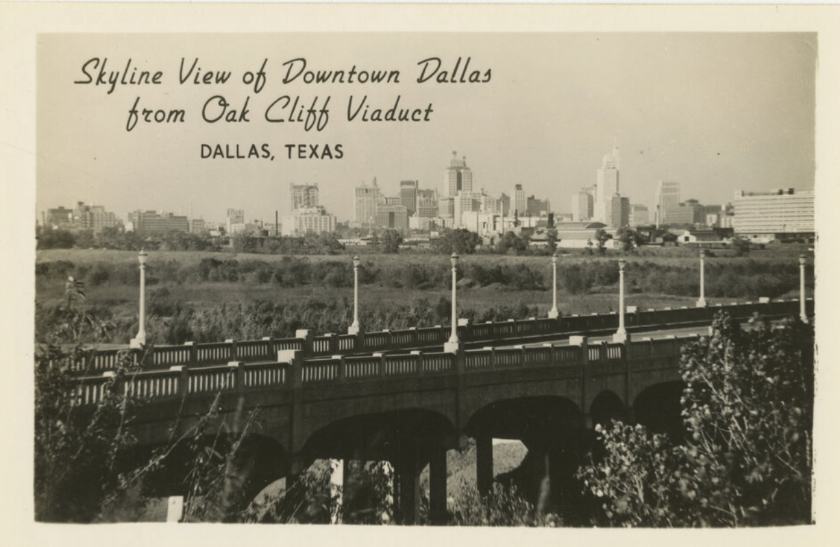
After attending a District 4 meeting last week about the viaducts connecting Oak Cliff to downtown and listening to the city representatives’ guarantee that “We are not cutting off the Cliff,” I came home and went down the rabbit hole of research again. That comment made me think about the history of the Houston Street Viaduct and when Oak Cliff was indeed cut off from Dallas for an entire week.
Reading the archived articles about the viaduct also reminded me that the more things change, the more they stay the same.
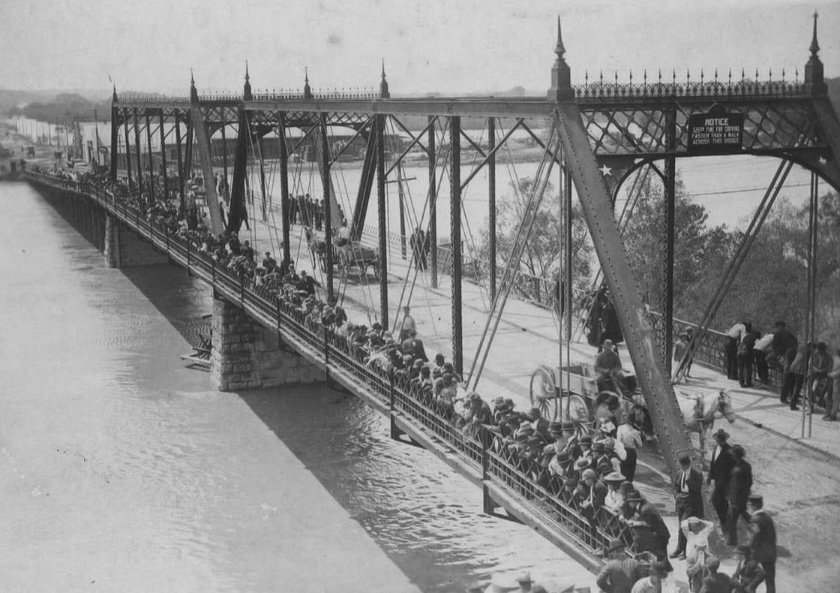
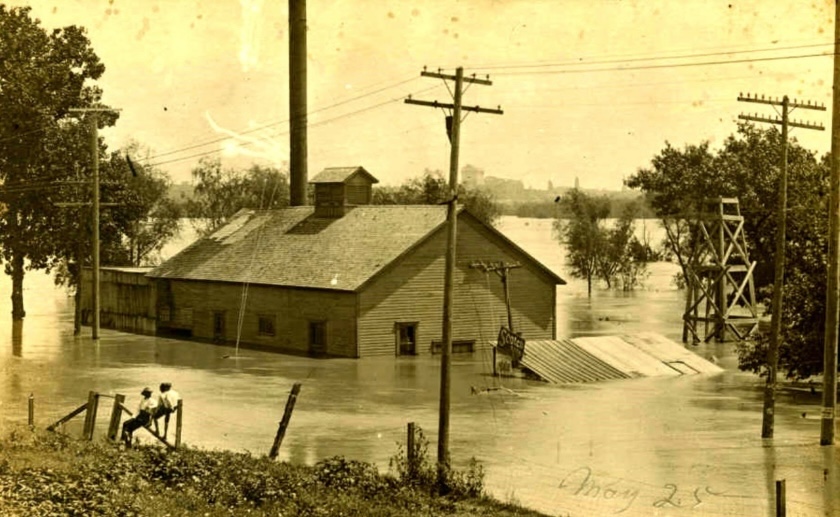
In 1908, the Trinity River flooded, washing away or submerging bridges connecting Oak Cliff to Dallas and causing a million dollars of damage to homes and businesses. The next year, the Dallas Chamber of Commerce established the City Plan and Improvement League, later renamed the Kessler Plan Association after pioneer city planner George E. Kessler. It addressed long-term civic improvements, and avoiding another devastating flood was obviously a priority. In 1909, the County of Dallas voted a bond issue of $600,000 to construct a viaduct. Once they acquired the right-of-way, there was $563,000 left for construction.
Some commentators asserted that the tax burden created by the Houston Street Viaduct project would become such an onerous burden on the community that Dallas County wouldn’t be fit to live in. One chronicler of the effort said the magnitude of it seemed to stun many residents of Dallas. They couldn’t understand money that ran into such figures, and charges of graft were freely made and hotly denied.
From research by Robert W. Jackson as part of the Texas Historic Bridges Recording Project
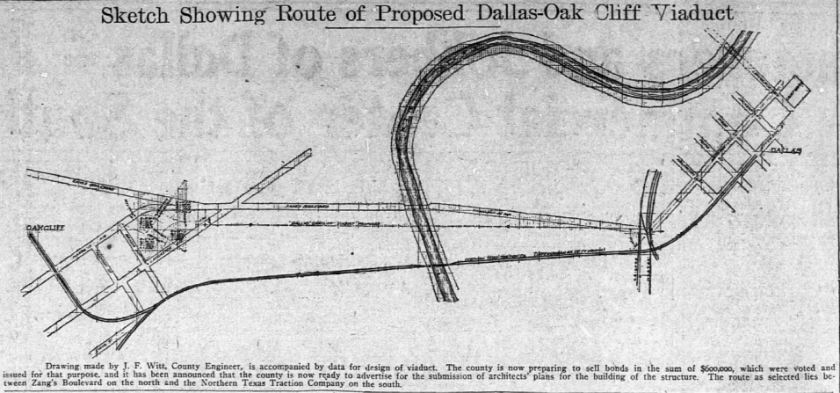
When you go back through the archives of the Dallas Morning News and read about the bond, the design, and the construction bids, you really understand my point: just how much nothing has changed. Bids were called for with six specifications listed.
1. Any structure between Dallas and Oak Cliff has to be of reinforced concrete of either arch or trestle construction.
2. The bridge must provide a roadway for vehicular traffic and shall include two sidewalks, with provisions for a double-track electric railway in the future.
3. It must be 50 feet from handrail to handrail, or any greater width, so long as that width does not cause the construction of the viaduct to exceed the money available.
4. Conduit spaces must be provided longitudinally throughout the viaduct of no less than 20 square feet.
5. All designs are to consider live loads of two 100,000-pound electric cars on each track plus 100 pounds per square foot, or a 15-ton road roller having a maximum axle concentration of 10 tons. Sidewalks should be designed to support 80 pounds per square foot.
6. Complete construction plans, specifications, and design analysis are to accompany bids.
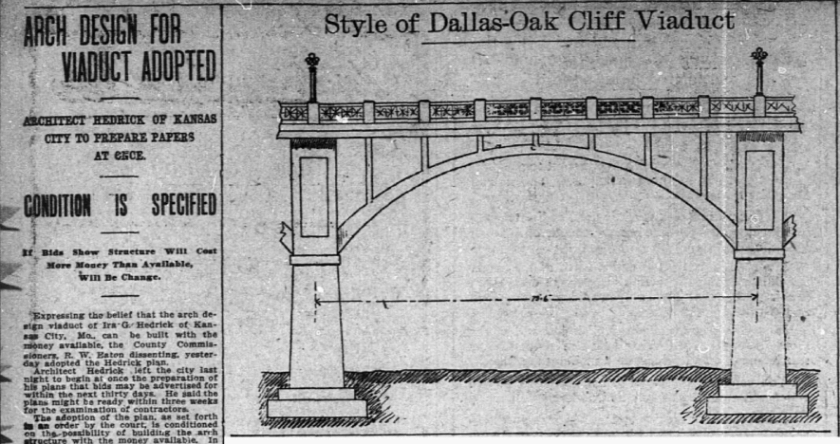
Ira G. Hedrick submitted the winning design. Corrigan, Lee, and Halpin of Kansas City, Missouri, were the general contractors, and Gulf Concrete Construction Company of Houston, Texas, was the foundation subcontractor. Work began in October 1910 and was completed in late 1911.
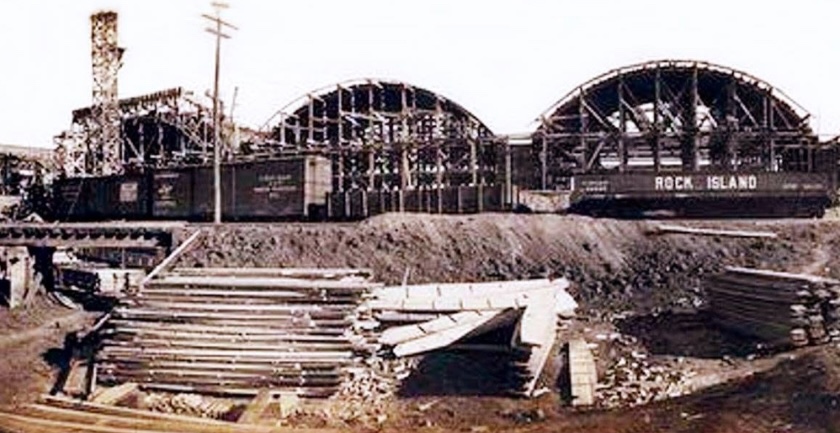
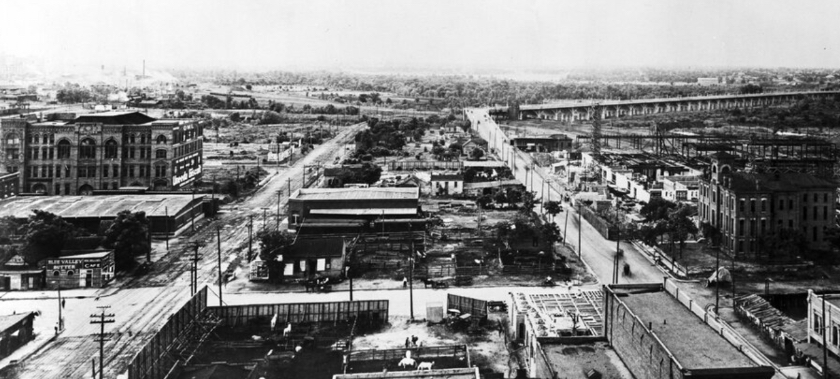
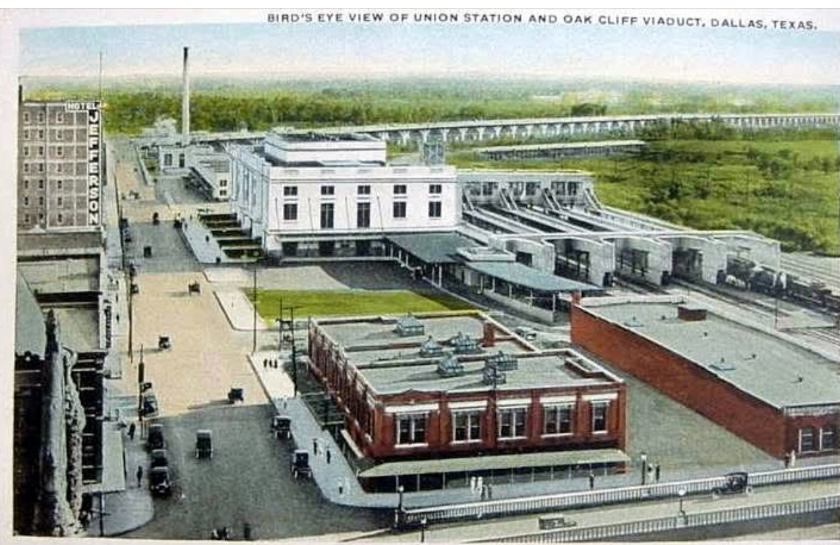
It appears that its original name was the “Dallas-Oak Cliff Viaduct” beginning in 1912 and was not formally approved by Council. The name “Houston Street Viaduct” first appears in the Dallas Morning News in 1920.
John Slate, City of dallas Archivist, dallas municipal Archives
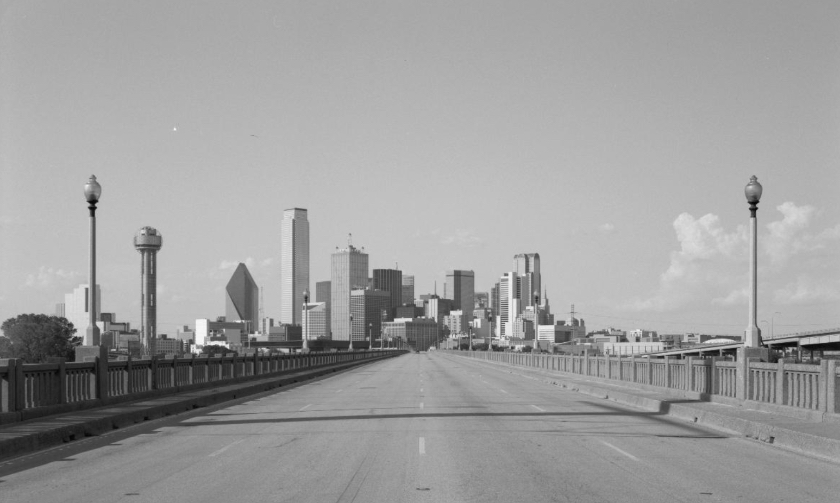
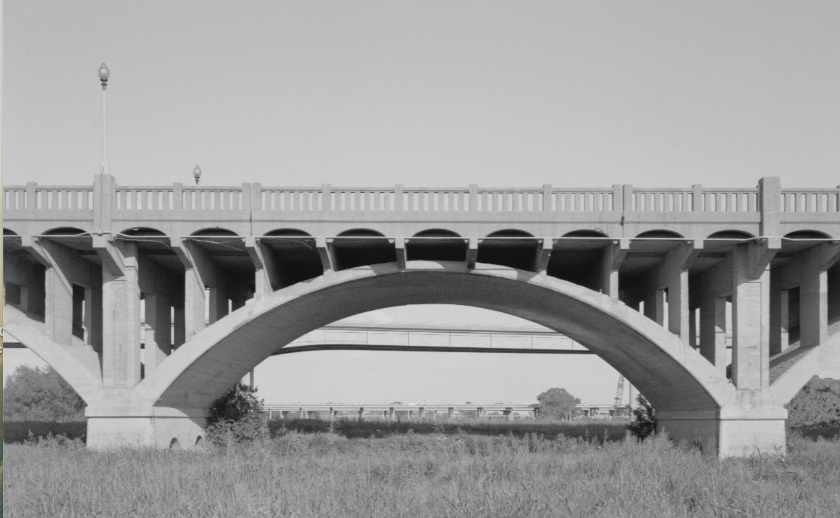
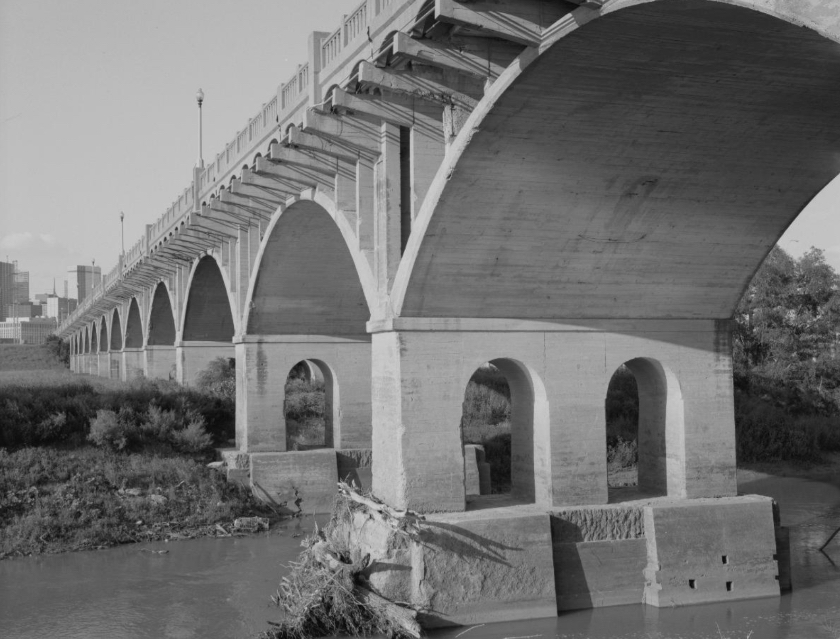
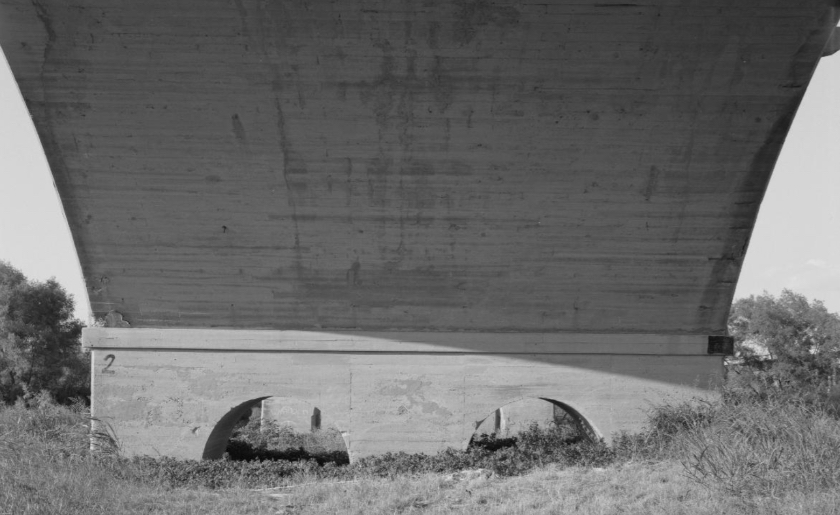
The Houston Street Viaduct is 6,562 feet long and 56 feet wide, with a roadway of 44 feet and two 4.5-foot sidewalks. There are 51 arches and one unusual feature: a 100-foot-long steel girder. This spanned over the river with special cast-iron “shoes” for transmitting the arch thrust through from the piers to the girder span. The idea was to make it easy for ships to pass under the bridge. The U.S. War Department had jurisdiction over navigable waterways and set clearance requirements.
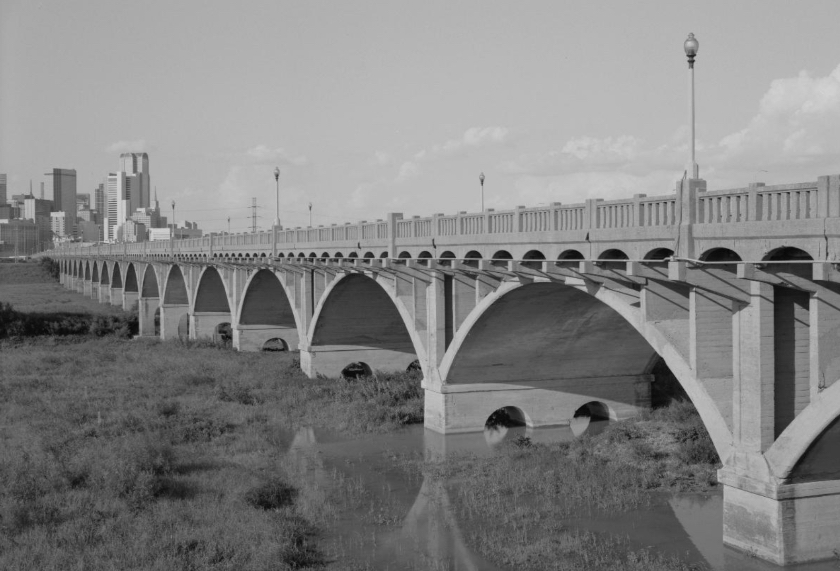
“It is a marvel of construction,” Kate Singleton said. Singleton is a historic preservation and economic development consultant and was chief preservation officer for the City of Dallas from 2007 to 2009. She wrote the initial local historic preservation nomination for the Houston Street Viaduct, which was eventually used to nominate the structure to the National Register of Historic Places. Singleton’s research also dispelled the popular notion that this was the longest concrete viaduct in the country.
In George B. Dealey’s papers at the Dallas Historical Society, a note in his writing states that the Kansas City Viaduct was longer than what they then called the Dallas Viaduct. Singleton also found that Dealey and Charles Mangold made the viaduct possible for Dallas by gathering information and taking council members to Kansas City. It’s not surprising that a Kansas City firm was awarded the construction contract since they had more experience than any other firm and had built a bridge that spanned 8,000 feet.
Singleton uncovered another amusing detail in her research.
“There was a drought that summer and a shortage of water, so instead of using water that could be used to quench the thirst of the community, they used raw sewage to mix the cement. E. N. Noyes, engineer, said: Three-fourths of the structure was built using this sewage for the concrete. This made good concrete, but it was very unpleasant working around the mixer due to the strong sewage odor.”
Be kind in your comments, folks, and realize it was pretty clever to “make do” with what they had!
The Jefferson Street Viaduct was constructed in 1973, allowing the two-way traffic on the Houston Street Viaduct to become one-way. As we look to the future convention center expansion, we will see a stretch of Houston Street go two-way once again. I can keep saying it, but you get the drift: the more things change, the more they stay the same.