
Investigating Tools of the Trade With the Home Inspectors
Share News:

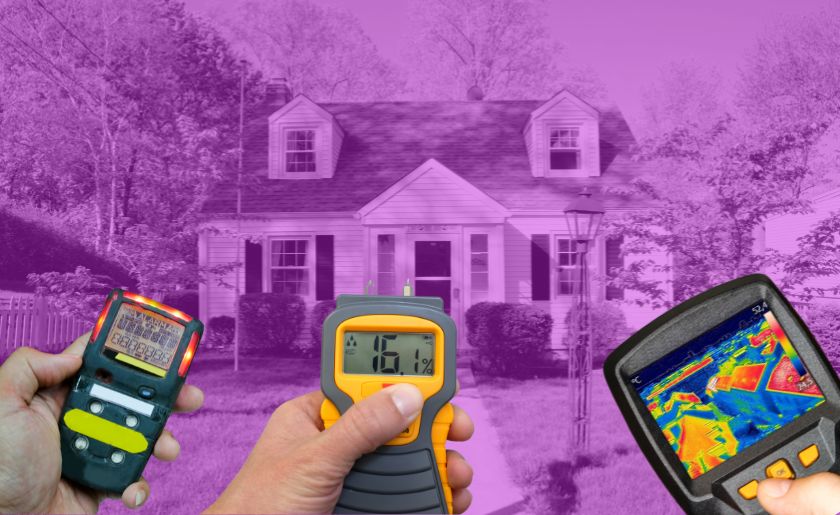
Part of doing any job right is having the correct tools, and home inspection is no different.
Our inspectors recently started a new series called “Tool Time Tuesday” in which they feature the devices they use and how they work in the field. These tools are all available at hardware stores or online for handy homeowners who want to perform these kinds of home inspection tests themselves. This week’s Upon Closer Inspection is all about the tools of the trade.
The Moisture Meter
Moisture meters are used to detect the presence of moisture (water) behind walls and floors. We’ve seen these gadgets in action in our column a number of times, leading home inspectors to uncover things like a bathroom leaking into the ceiling below or a leaking pipe under the floor.
In the video above, Inspector Luis shows how an inspector should always check for moisture inside the walls whenever there is a high soil line against the foundation, which can cause moisture to leak into the home.
The Gas Detector
There are different types of gas detectors out on the market. In this case, Inspector Adrian is using his secondary gas detector to demonstrate its sensitivity, successfully finding a minor leak at the gas meter. When there’s a leak at the gas meter, it’s the gas company’s (or the city’s) job to come out and fix it. If you find a leak in an appliance, you should actually call a plumber licensed for gas plumbing. Did you know that was a thing?
The Thermal Camera
Another tool we’ve featured frequently in this column is the thermal camera. This tool is useful for finding temperature differentials behind walls, floors, and around doors, windows, and vents. Such differentials can indicate either the presence of water, missing insulation, or broken seals where unconditioned air is flowing where it shouldn’t.
In this video, Inspector Tracy shows how inspectors use the thermal camera to check that vents are blowing as hot or cold as they should (depending on the season) and that they are sealed properly.
Carbon Monoxide Detector
If gas appliances are present in a home, an inspector will always check for carbon monoxide. This tool, above any of the others, is a good one for homeowners who have gas appliances to purchase, especially if those appliances are older. The risk of carbon monoxide leaks or some kind of equipment failure causing carbon monoxide build-up becomes greater as appliances age.
Those are a few of the tools home inspectors use when evaluating different parts of a home. You might add these gadgets to your gift list for the avid DIYer or budding home flipper in your life. You could also just treat yourself if you’re looking to get more handy, but if you’d like a real professional else to put them to use, you can always schedule a seasonal home maintenance home inspection to check the status of your home.