What Dallas Neighborhoods Are Vulnerable to Gentrification? More Than You Think
Share News:

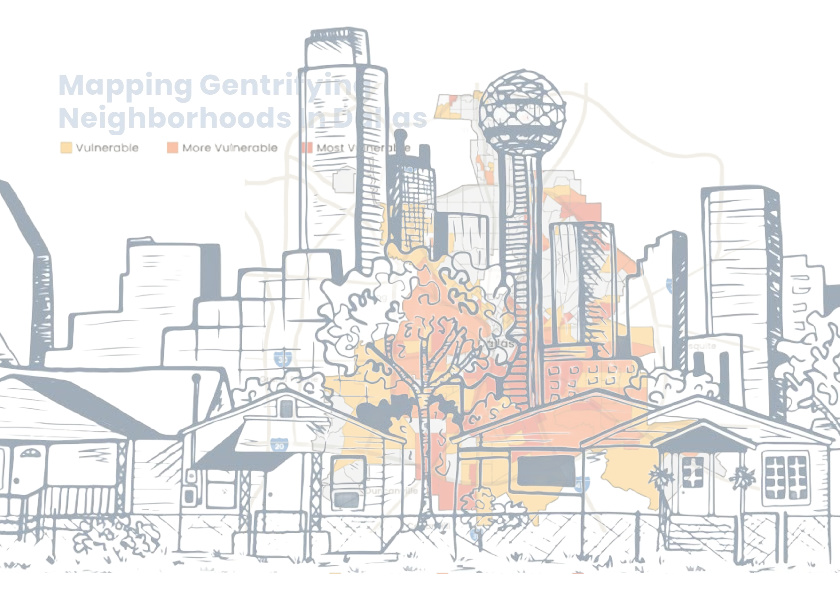
While lower-income residents in some Dallas neighborhoods find themselves especially vulnerable to gentrification, Dallasites of all stripes have been feeling the heat from rising housing costs and property taxes that could price them out and leave them susceptible to displacement, too.
Groups like Builders of Hope Community Development Corp. are working to help prevent and mitigate the impact faced by vulnerable residents throughout the city of Dallas. The group launched its Anti-Displacement Toolkit — an analysis of growing gentrification in Dallas with policy recommendations to combat various stages of displacement — and presented the toolkit to the Housing & Homelessness Solutions Committee last week.
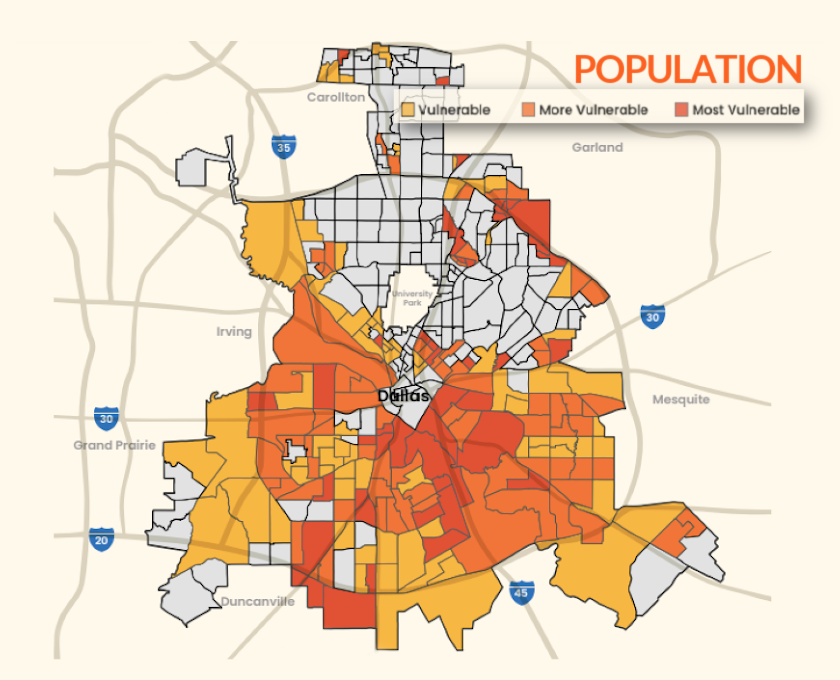
“Our findings show that displacement pressures are varied and widespread throughout Dallas, with over 40% of neighborhoods either susceptible to or currently experiencing some stage of gentrification,” Stephanie Champion, the organization’s chief of community development and policy, told the committee members.
That means one in five Dallas neighborhoods is in the early stages of gentrification, primarily in southern Dallas, and one in 10 Dallas neighborhoods is in the dynamic or late stages of gentrification, according to the presentation.
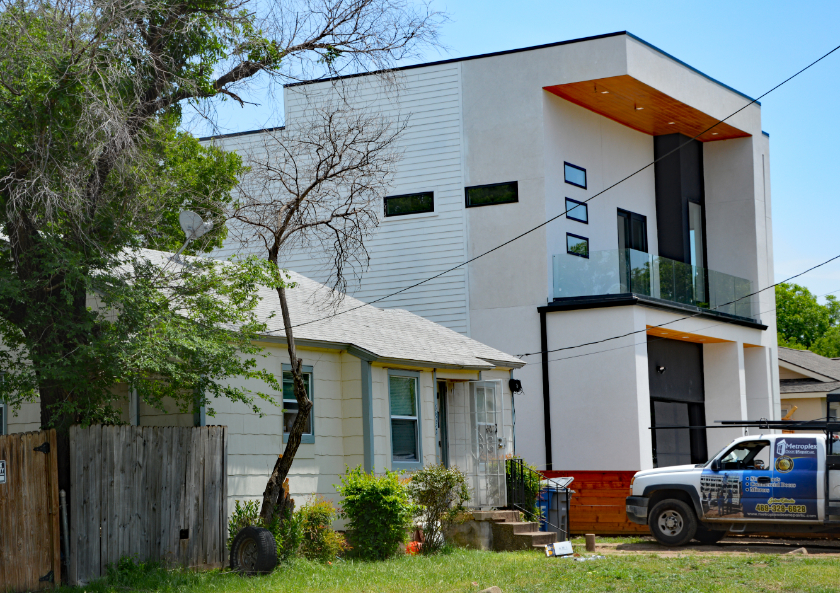
Many Dallas neighborhoods have already experienced extensive displacement, or what Builders of Hope classifies as historic loss over the last 10 to 20 years. Such neighborhoods include Elm Thicket/Northpark, the Cedars, and Kidd Springs, among others. These communities were “physically transformed through the influx of new higher-end construction.”
“Neighborhood demographics shift as new higher-income residents move in,” Champion said. “Existing low-income residents, often black or Latino, are directly or indirectly displaced, and the cultural character of the neighborhood is fundamentally and forever altered.”
What Dallas Neighborhoods Are Vulnerable?
Southern and western Dallas have large swaths of vulnerable single-family neighborhoods that Builders of Hope says could be lost to gentrification, but North and East Dallas are not impervious to displacement either. Neighborhoods in Northeast and East Dallas along LBJ Freeway and Far North Dallas have large vulnerable populations that are likely in early stages of gentrification, Builders of Hope data shows.
More specifically, multi-family residents in Vickery Meadow, a small section of Northeast Dallas near Park Lane and Greenville Avenue, are especially vulnerable to being priced out of their housing markets because of rising rents and land values.
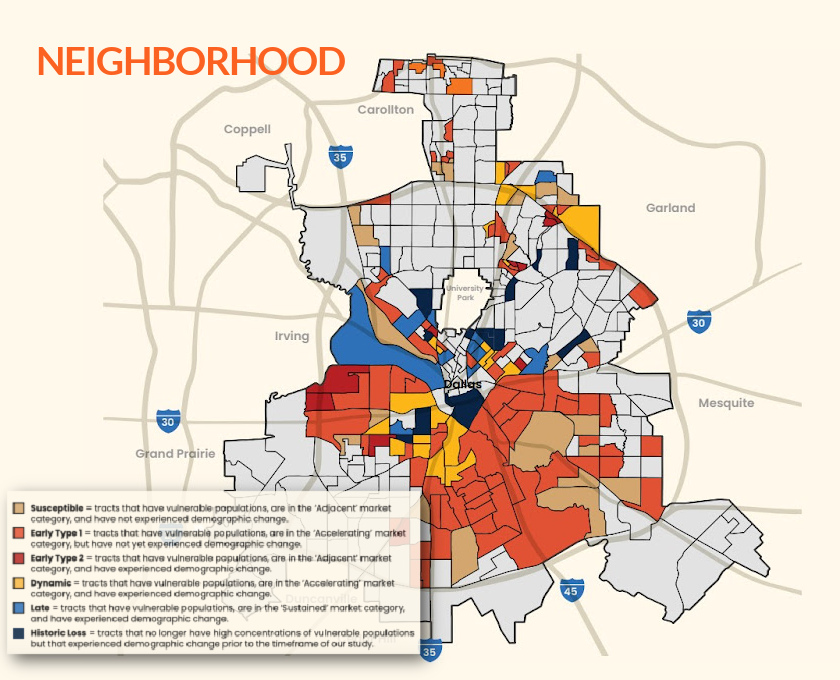
Builders of Hope’s toolkit offers fascinating case studies for neighborhoods in West Dallas, South Dallas, and Vickery Meadow in Northeast Dallas.
South Dallas had become a significant center of black home ownership by the 1960s, but waves of eminent domain for development projects that primarily benefited white residents chipped away at the community, eventually leaving black legacy residents with few affordable housing options in the area. Proximity to downtown has also been a driver of gentrification in the area, with developers putting significant dollars behind higher-end projects.
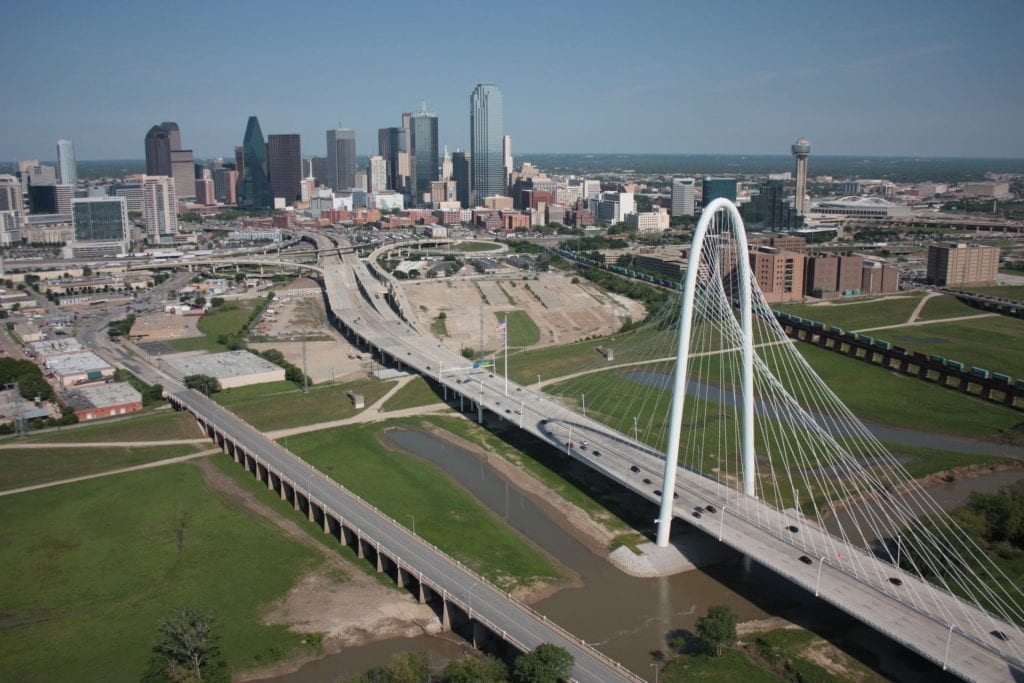
In West Dallas, which has historically been somewhat cut off from the city center, black and Latino communities of modest means were able to establish themselves in quiet residential neighborhoods. That all changed in 2005 when construction started on the Margaret Hunt Hill Bridge, which connected West Dallas to downtown and spurred developer interest. The money started pouring in, and residents found themselves struggling under new economic pressures.
For its part, Vickery Meadow became a haven for immigrants who found ample affordable multifamily housing there in the late 1970s and 1980s and created a thriving multicultural environment. But the 1- and 2-bedroom units were not built for multi-generational living as these international families were prone to do. The apartments aged poorly and the new residents have endured slum conditions for some time.
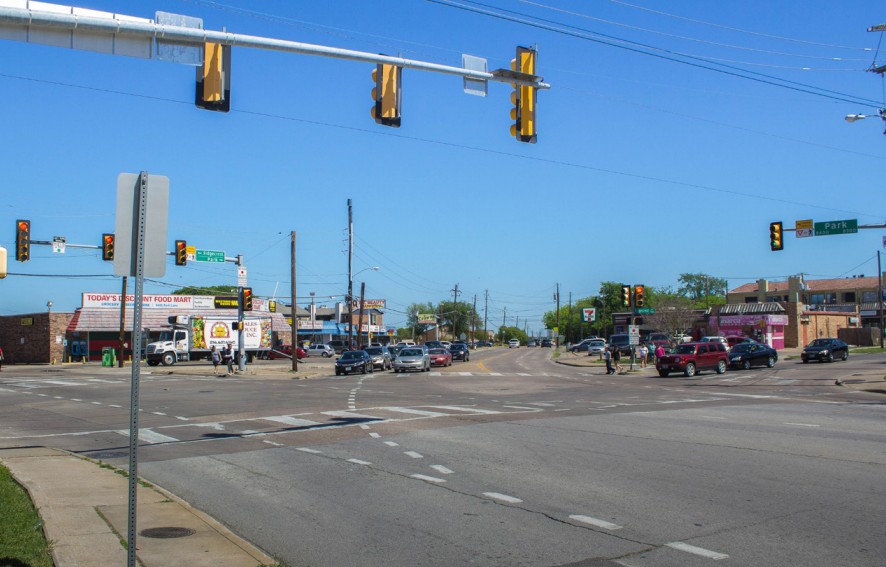
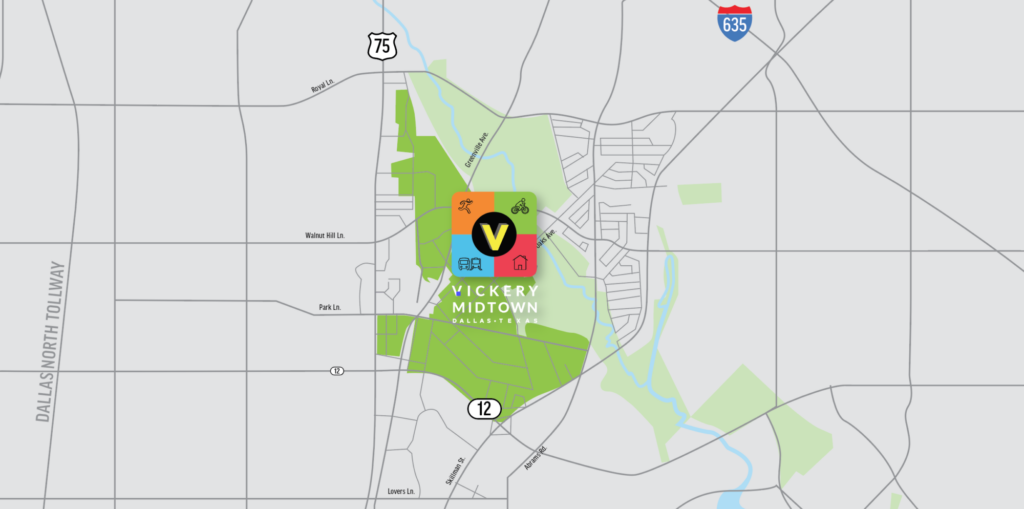
However, the neighborhood became a target of city officials who wanted to spur redevelopment of the “functionally and structurally obsolete commercial and rental residential area,” according to the toolkit. The creation of the Vickery Meadow Tax Increment Financing District in 2006 led the way for mixed-use developments like The Shops at Park Lane, where no units were reserved for affordable housing. Only in Vickery Meadow’s oldest apartment homes can one still find a studio unit for under $1,000 per month.
The area is still facing upward pressures that imperil lower-income legacy residents who were already previously displaced from their countries of origin. It’s been a problem for years now.
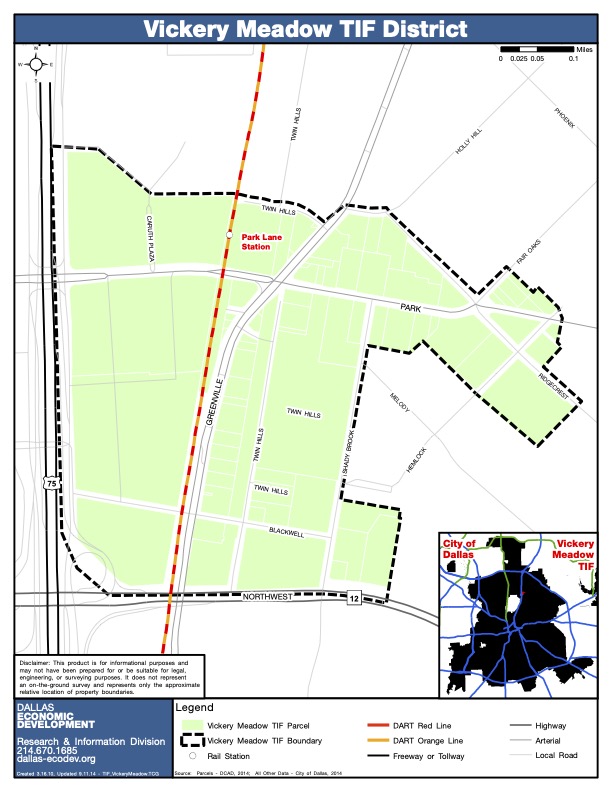
The toolkit recommends enhanced anti-eviction protections for renters and funding for tenant and community organizing in Vickery Meadow as two possible strategies to protect the neighborhood’s residents from displacement.
What Did Council Members and Other Officials Have To Say?

While the Housing & Homelessness Solutions Committee did not take action related to Builders of Hope’s presentation last week, Champion said she hopes some of the recommendations made in the toolkit percolate into policy through the various city departments her group has been working with.
That sentiment was similarly expressed by Thor Erickson, the assistant director of the Department of Housing and Community Development.
“Many of the recommendations need more research from staff or legal and a little more time to understand how we would work on all aspects. But from a moment in time where we didn’t have a compilation of policies and strategies looking at this particular issue, it’s a really great starting place for us to work collaboratively,” he said.
Council Member Jesse Moreno (District 2), the committee’s chair, quipped early on that he wished he and his colleagues had the information from the toolkit a few months ago, almost certainly referencing the contentious debates surrounding ForwardDallas and its emphasis on density and building more affordable housing.
“Anti-displacement is so important to me. I truly believe that the affordable housing that we have in place is the most important affordable housing. It’s great to build new affordable housing, but we know how long it takes and we know how expensive it can get,” he said.
For her part, Champion said she was not a believer in the notion that building more housing will automatically result in price competition kicking in or demographics “filtering” upward and freeing up more affordable housing stock.
“I think what we need to be doing is when we know there’s a property slated for teardown because it’s expiring its existing affordability compliance period or it’s just a naturally occurring affordable housing unit that’s fallen into such a state of disrepair that we know that it’s likely going to be torn down and redeveloped, we try to actively outreach to that property owner and see what we can do to preserve those units as much as possible, or if the only option is to tear down and redevelop, then we make sure that there’s a preference policy in place [for legacy residents] and that what goes up after is mixed-income,” Champion said.
Click here to read the full toolkit.