
Dallas Neighbors For Housing Founder Adam Lamont Talks Affordability And Planning For The Future
Share News:

Adam Lamont is a pretty normal guy. He moved to Dallas in 2017 to work on U.S. Rep. Collin Allred’s Congressional campaign and rented an apartment with a roommate. When he got married in 2021 he moved into his wife DeDe’s Chimney Hill townhome near Lake Highlands. He teaches math and coaches sports at a Dallas ISD middle school.
So why is everyone so mad at Adam Lamont?
Lamont, 30, has been typecast as a progressive young person who wants more diverse, affordable housing stock in Dallas. All of those things are true, but some Dallasites who enjoy their single-family neighborhoods just the way they are, thank you very much, say such idealistic advocates are misguided and threaten the sanctity of their quality of life.
Dallas Neighbors For Housing
Lamont and his wife formed Dallas Neighbors For Housing in January 2022.
While Lamont often advocates alongside Bryan Tony and Ashley Brundage at Dallas Housing Coalition, the two organizations are not the same.

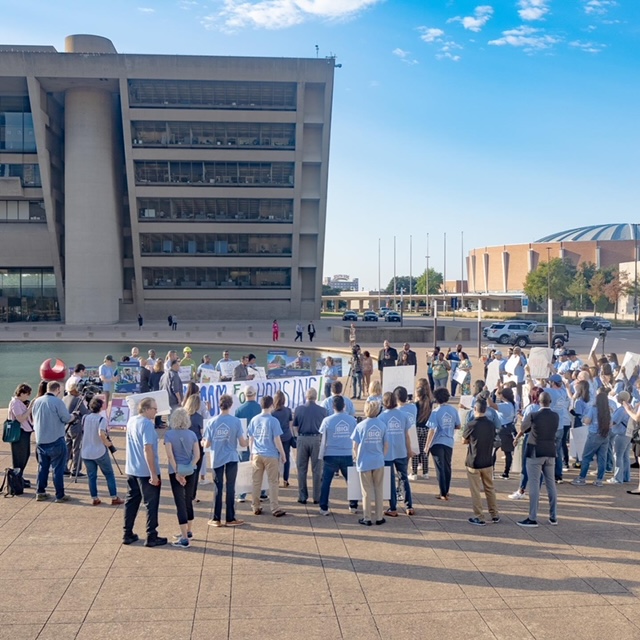
Dallas Neighbors For Housing has just 40 individual members; DHC has about 180 partner organizations. DHC hosts rallies with free breakfast tacos, has invested funds in pro-housing bond election signs and campaign materials, and will have an Election Night watch party on May 4. DNH is a bit more dialed down, Lamont explained.
“We’re really the grassroots side of things for anyone who is interested, has a normal 9 to 5 job, and just wants to get involved in their own way,” he said.
DNH launched as home prices were skyrocketing across the country and some cities were identifying what appeared to be reasonable solutions to a housing crisis, Lamont said.
“There were also some specific cases that had come before council, one being the 12000 Greenville project that got shut down,” he said. “It does have a happy ending with the conversion of the motel. The other one was along Forest Lane at Forest and Preston,” he said. “For us, it was just about seeing the amount of opposition to those cases and seeing the need for there to be a voice for housing.”
A Fundamental Need
Housing is one of the most fundamental needs, but it’s complicated, Lamont told CandysDirt.com.
“It’s not easy to understand how we can make housing work best for everyone,” he said. “In looking at it and seeing what the status quo is, it’s not working for people. The basic idea is we can make changes to improve it but it will take action on our part.”
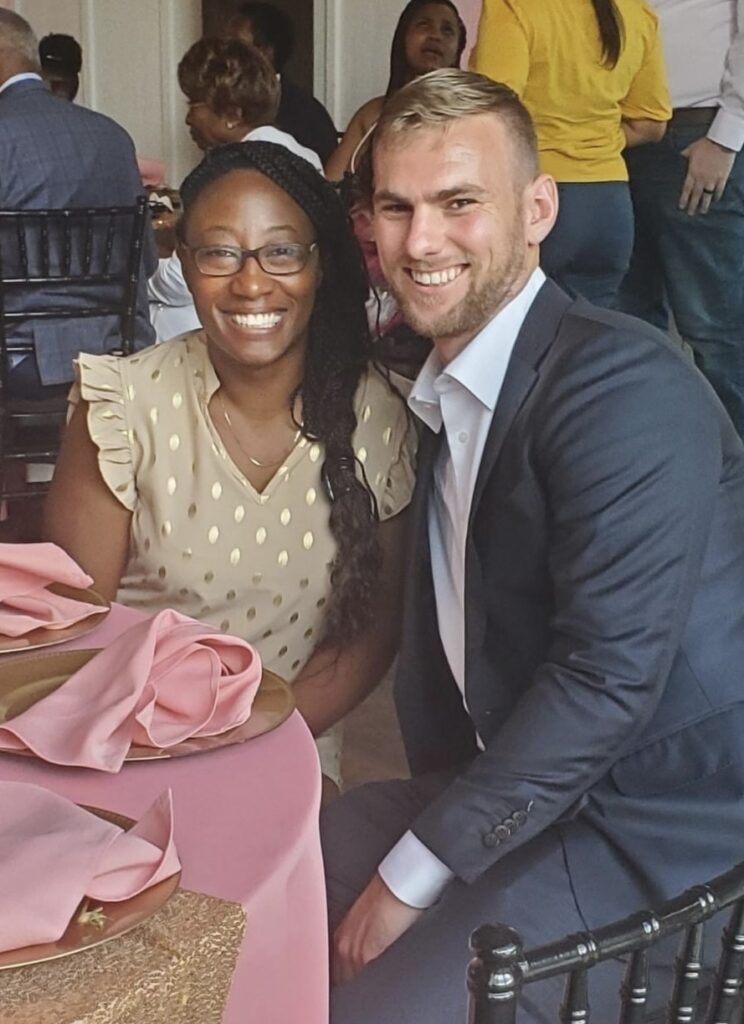
Team leaders listed on the DNH website include Lamont, his wife and co-founder DeDe Alexander, Chris Robles, and Hosanna Yemiru.
Yemiru ran for the District 11 Dallas City Council seat against Jaynie Schultz, Barry Wernick, and CandysDirt.com publisher Candy Evans in 2021. Schultz and Wernick competed in a runoff election, and Schultz won with 4,443 votes to Wernick’s 3,790. Schultz was re-elected in 2023.
But that’s irrelevant now, as Robles and Yemiru are no longer actively involved with Dallas Neighbors for Housing. New team leaders include Courtney Hunter and Abraham Moreno.
In 2014 Alexander purchased her Chimney Hill townhome, where Lamont moved once they were married, through the Dallas Mortgage Assistance Program and Neighborhood Lift Down Payment Assistance Program. The Chimney Hills Townhomes are tucked into a high-density area where multifamily development is prevalent.
“It’s not a super-wealthy community but it’s very quiet, very nice,” Lamont said. “We look across the street and see two-story apartments and garden-style complexes. I think that’s part of it. We live in that kind of neighborhood and we know the kind of diversity you can have in that kind of neighborhood. For us, it’s not anything to be afraid of. It can very much work at a citywide level.”
Dallas Bond Election
This weekend’s bond election and the comprehensive land use plan are equally prioritized by Dallas Neighbors for Housing, Lamont said. The May 4 bond includes Proposition G, which offers $72.3 million for economic development programs including residential and mixed-use development; Proposition H, which offers $26.4 million for housing; and Proposition I, which offers $10 million for homelessness.
“We want to make sure the bond gets passed,” Lamont said. “We wanted to do more in terms of outreach and, to be honest, we didn’t do it. That’s just sort of a function of us not being as organized as we should be.”
Bond funds can be used through mechanisms like the Dallas Housing Finance Corporation to subsidize housing on publicly-owned lands to maximize affordability, Lamont said.
“The complicated part of that is most city-owned land is in southern parts of Dallas, so you don’t want to concentrate poverty in those areas,” he said. “You have to think that through and potentially work with the county or Dallas ISD to find land that might be in a more high-opportunity area.”
The Push Forward For Dallas Comprehensive Land Use Plan
Because the other major housing advocacy group, Dallas Housing Coalition, has been so organized in its support of the bond, DNH shifted its focus in the short term to the city’s comprehensive land use plan update, slated to go before the City Council in June.
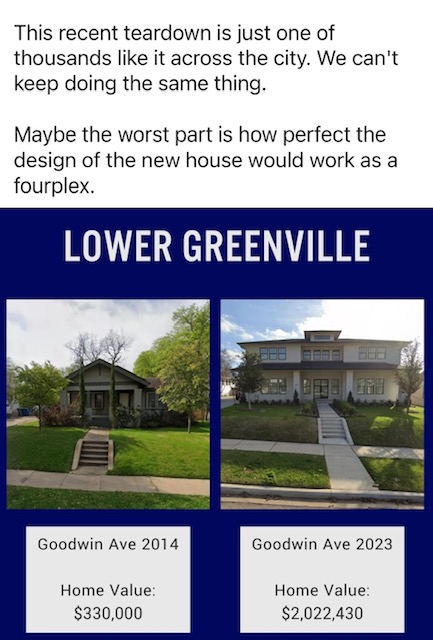
“We wanted to make sure there is a voice that is helping ForwardDallas to move forward,” Lamont said. “A lot of work has gone into it already with staff and the [Comprehensive Land Use Committee]. We want to make sure that we’re not watering it down and making it not mean anything.”
Minneapolis, Portland, and several California municipalities have implemented reforms that didn’t lead to immediate widespread changes, Lamont explained.
“It is going to be a gradual change because of the complications of infill housing,” he said. “It’s not nearly as profitable as people think it is. When we look at what actually happens when other cities have done this, it is not a huge change suddenly. There are things that are going to benefit from you having more people in your neighborhood. You can have safer neighborhoods when you have more people. There are more opportunities for a business to open up when you have more customers nearby.”
And while sometimes the Millennials may feel as though they’re up against Goliath, what everyone on all sides of the housing issue wants is the same: a better Dallas.
“Dallas is a fascinating place to live, and I love the life I’ve been able to build here,” Lamont said. “I’m just trying to make it a little bit better.”